EAT South engages our community through educating about, gathering people around, and growing good food. We aim to change the way food travels from the ground to our plates.
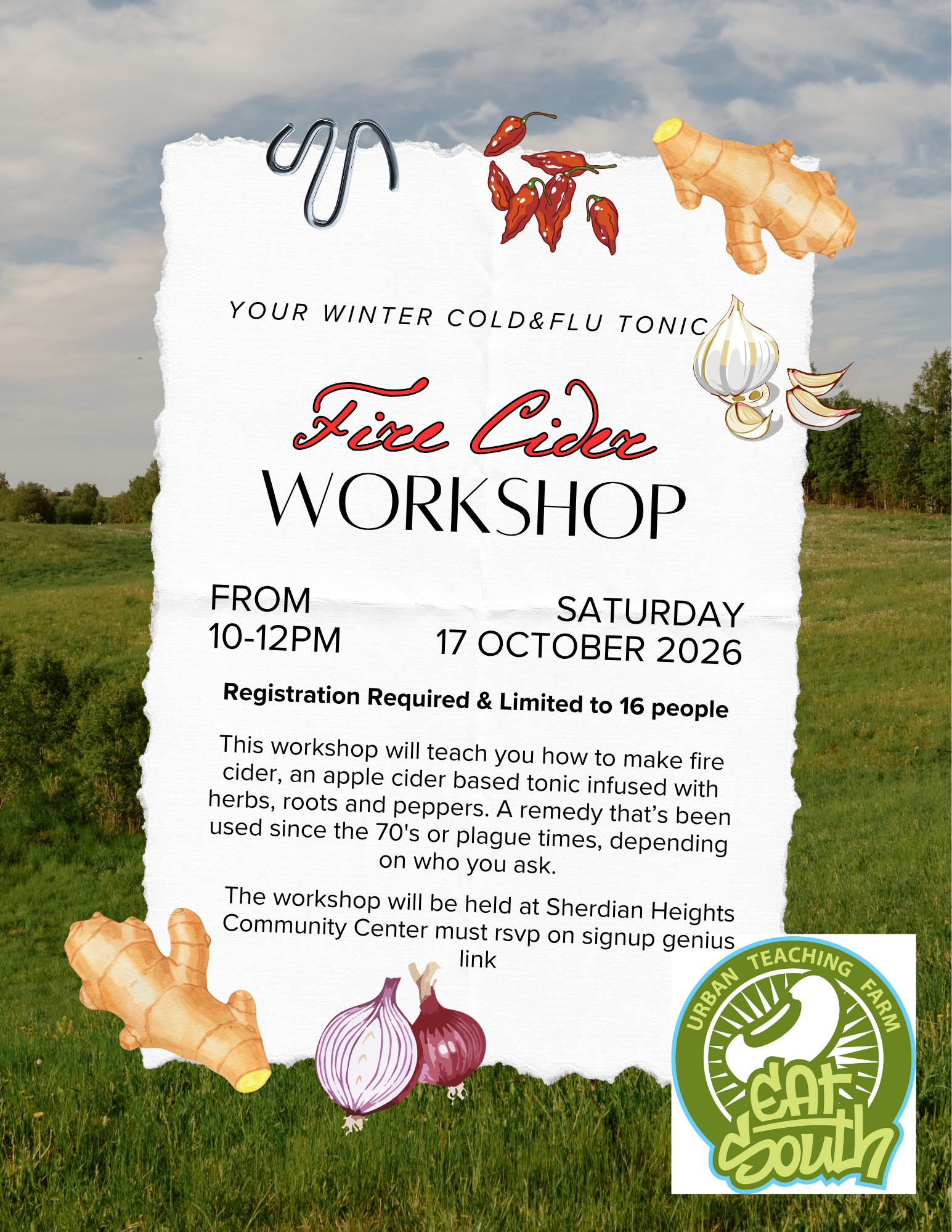
RSVP at the link! $20 a seat and everyone takes home a mason jar of fire cider.



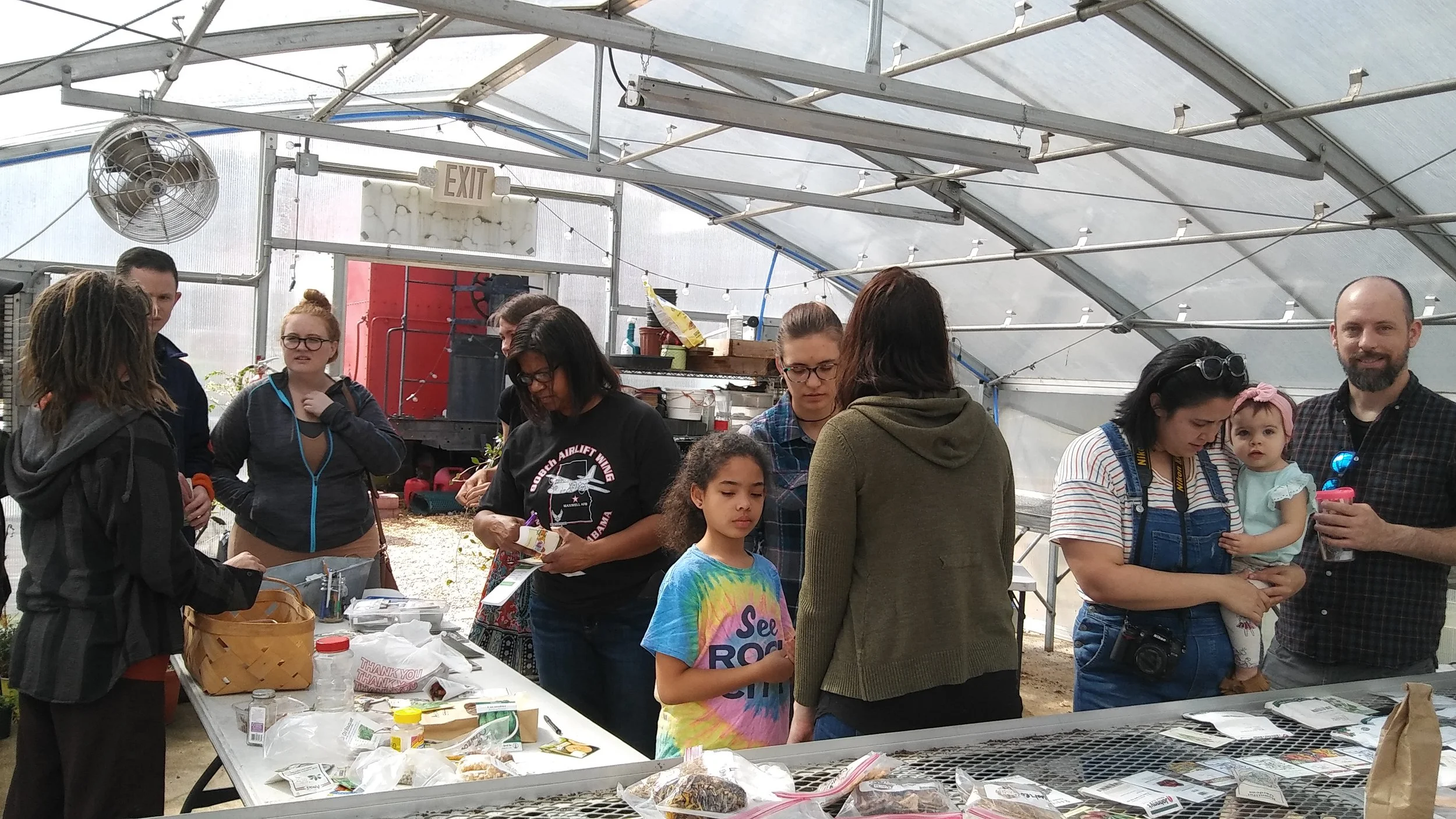
Host Your Own Seedy Saturday
share seeds, build community
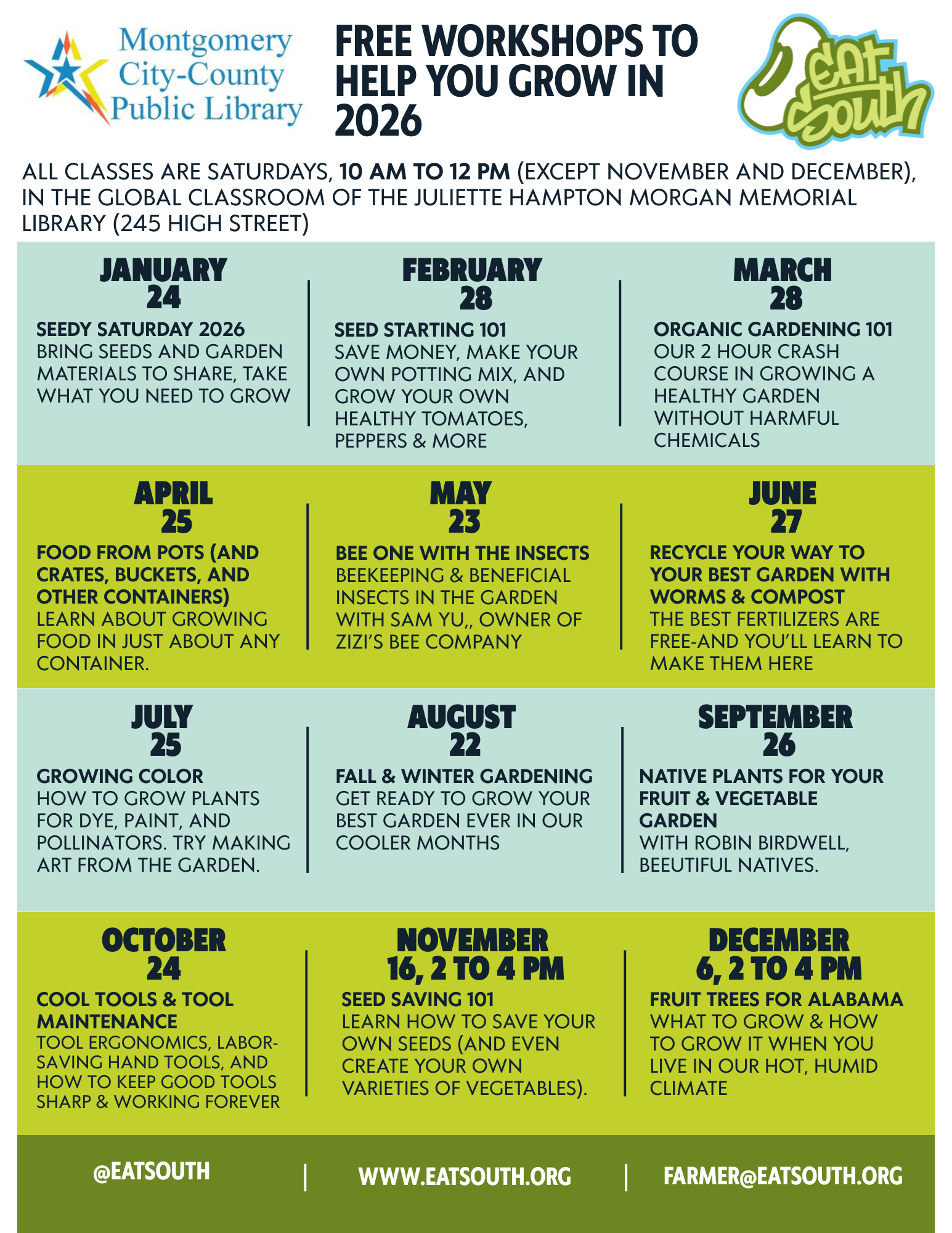
For nine years, every January (and the occasional February), E.A.T. South has hosted a seed exchange and give away, Seedy Saturday.
This event kicks off our new year and new growing seasons. It helps us reconnect with volunteers, inspire new followers, and we just enjoy doing it.
You can organize your own event. The button below will connect you to our new resource guide: Seedy Saturday: Your How-To Guide to Organizing Your Own Seed Swap.

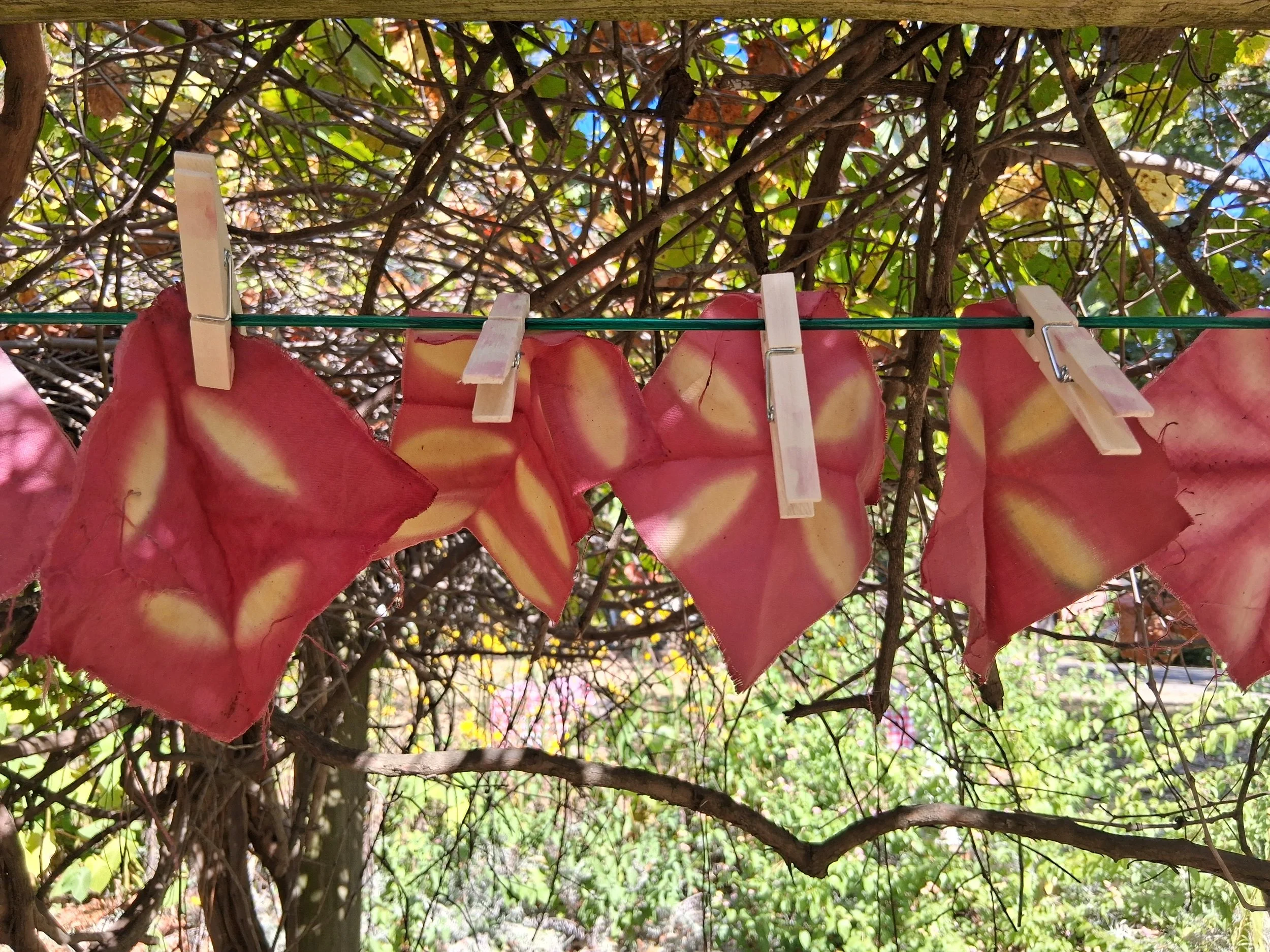
Cotton fabric dyed with Japanese indigo grown in Montgomery, Alabama.
Grow your own colors this summer
For four years, we’ve grown dye plants with our neighbor, artist, and dye co-conspirator Tara Cady Sartorius.
Getting started with natural dyes is relatively easy. Making dye is like making a really strong tea!
We’ve compiled a list of our favorite blogs, books, and Instagram feeds that all have resources and inspiration to get you started. You’ll find it on our blog or through the link below.
We’ve also included a list of plants we’ve grown over the past four years and some observations about which one like (or are very much challenged by) our climate.
Look for more dye classes in the fall.
Question? Email Farmer Caylor.
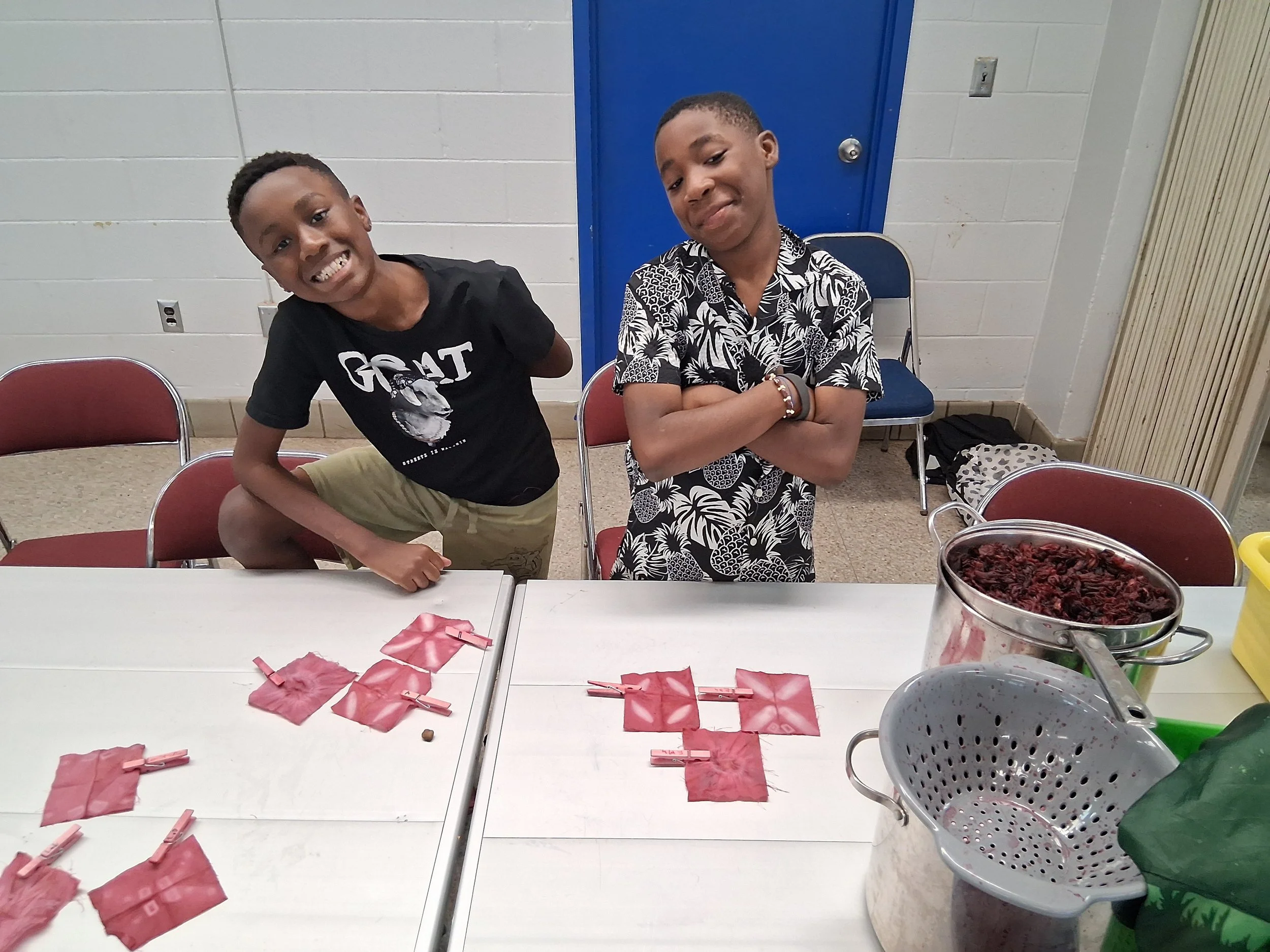
Dyeing fabric with hibiscus during Montgomery Parks and Recreation Summer Camp
Updated Educator Resource Guide
Want a garden at your school? Start here. The button below will link you to our updated Educator Resource Guide. This guide includes links to resources to help you start and sustain a garden at your school, summer youth program, or after school program..
You’ll find sections on curricula, fundraising, building a garden team, and more.
School gardens have shown to reduce anxiety in children and improve test scores. Gardens provide practical skills and are places where children can apply lessons from all subjects.
Follow the link below for our updated 2024 guide.